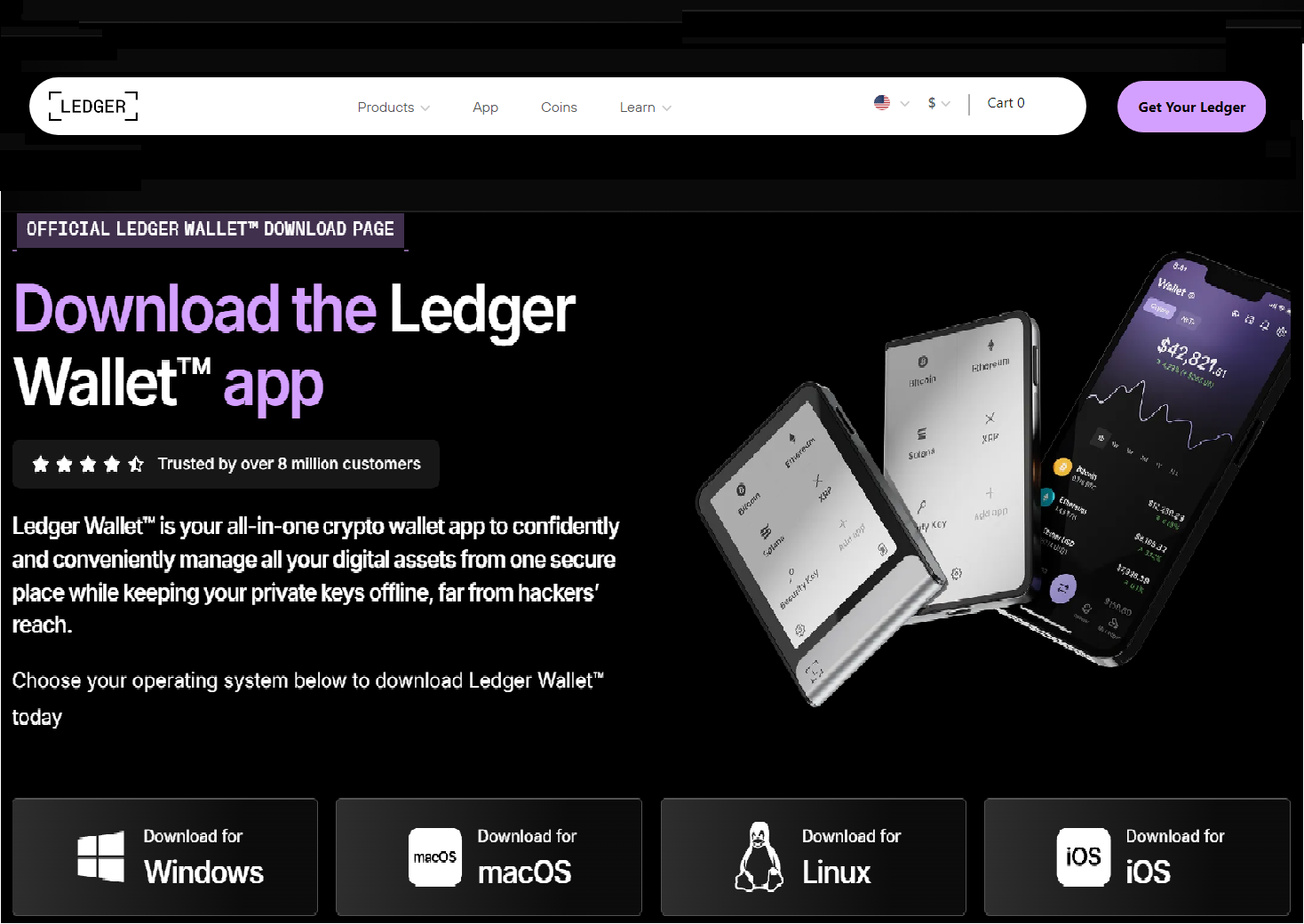
Ledger Live Desktop: What to Check When Your Wallet Interface Looks Different
Software interfaces can change over time. Buttons may move, menus can be reorganized, and new features may appear after an update. For someone returning to Ledger Live Desktop, these changes can initially make the wallet look unfamiliar.
An unfamiliar interface does not automatically mean there is a problem. Instead of making immediate changes, take a structured approach to understanding what has changed.
Confirm You Are Using the Official Application
First, verify that you are using the legitimate Ledger application.
Avoid opening wallet software obtained from unfamiliar download sites or links in unsolicited messages. If you recently reinstalled your computer or downloaded the application again, verify the source before entering any wallet information.
Using the correct application is the foundation of a safe wallet workflow.
Check for Recent Software Changes
If the interface looks different from what you remember, consider whether the application has recently been updated.
Read the available official information about current versions and features. A layout change can simply be part of a normal software update.
Do not install an older or modified version just because it looks more familiar.
Review Your Accounts
After confirming the application, check your account list.
Look for the accounts and assets you normally use. If the organization appears different, take some time to understand the current layout before beginning a transaction.
Clear account names can make this process easier when multiple accounts are involved.
Check Recent Activity
Review recent transaction history to make sure your account activity looks familiar.
If balances or transaction information appear different, avoid immediately assuming that funds are missing. First check the selected account, asset, network, and available transaction information.
If something remains unexplained, use official Ledger documentation before taking further action.
Reconnect Your Hardware Wallet
If you recently updated or reinstalled Ledger Live Desktop, your Ledger device may need to be connected again.
Use the appropriate cable and follow the normal connection instructions. If the device is not recognized, check the physical connection and consult official troubleshooting information.
Avoid installing random tools that claim to repair the connection.
Verify Transactions on the Device
When preparing a transaction, do not rely exclusively on what appears on the computer.
Your Ledger hardware wallet may display important information that needs to be reviewed before approval. Carefully compare the destination, amount, and other available transaction details with your intended action.
If something does not match, do not approve the transaction.
Be Alert to Fake Support Messages
An unfamiliar interface can make users more susceptible to fake technical-support offers.
Be cautious of messages claiming that your wallet needs to be “validated,” “synchronized,” or “unlocked” through a special website.
Never provide your recovery phrase to someone claiming to fix Ledger Live Desktop.
Avoid Unnecessary Changes
When something looks different, changing multiple settings at once can make troubleshooting harder.
Start with simple checks: confirm the official application, review the current version, reconnect your hardware wallet, and check your accounts.
Make only changes that are necessary and supported by reliable documentation.
Give Yourself Time to Adjust
A new interface can take a little time to become familiar. Explore the menus and account pages before performing an important transaction.
Once you understand where your regular functions are located, your normal wallet routine can continue without unnecessary disruption.
Final Thoughts
A different Ledger Live Desktop interface does not necessarily indicate a wallet problem. Updates can change layouts and introduce new features, so the best response is to verify the application, review your accounts, reconnect your hardware wallet, and understand the current interface before making important transactions.
Stay cautious with unexpected support requests, verify transaction information on your hardware wallet, and keep your recovery phrase private at all times.